Historic Harlem Court House

The Harlem Community Justice Center's Reentry Services are located in East Harlem

2013 Reentry Graduation starts with a song

The choir started off the celebration this year at the Reentry Court Graduation

Family Reentry Summer Celebration

During the summer, we host a block party and celebration for Reentry clients and their families

Reentry Graduation

Young man thanks his Parole Officer for keeping him on track

Harlem Reentry Graduation

Families join to celebrate the accomplishments of graduates

Nov 30, 2010

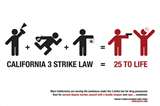
Do "getting tough on crime" policies work to deter criminal behavior?

A recent publication by the Sentencing Project, Deterrence in Criminal Justice: Evaluating Certainty versus Severity of Punishment  written by Valerie Wright, Ph.D. tackles the question: Does the threat of an enhanced sanction provide any deterrant benefit" to someone who might otherwise commit a crime?  The paper postulates that more severe santions do not have any significant effect on reducing crime because:

  • Research demonstrates that the "general public tends to underestimate the severity of sanctions generally imposed" and are often unaware of any enhanced sentencing structure.
  • Deterrance theory "assumes people are rational actors who consider the consequences of their behavior," however 1/2 of prisoners are under the influence of alcohol or drugs at the time of their offense.
However, according to Wright,  research demonstrates that increasing the certainty of punishment does serve to deter criminal behavior. For more on this topic, see HOPE probation's research brief.

Nor do harsher sentences appear to reduce recidivsim.  In one 1999 study involving over 300,000 offenders, longer sentences actually increased the liklihood of a return to prison. Those who remained in the community had the lowest liklihood of recidivism.

Click here to read the Sentencing Project's latest paper in full.

Nov 23, 2010

Pro-Football Player Maurice Clarett Embraces His Second Chances

After spending three and a half years in prison, former NFL draft pick, Maurice Clarett is grateful for his second chances. The Washington Post article, "'Blessed' Clarett  plans to keep playing football," reports that that the Omaha Nighthawks  are considering putting him on the team's protected list for next season. Despite his 2006 conviction for aggravated robbery and carrying a concealed weapon and various other public tribulations, Mr. Clarett played for theNighthawks this past season. Mr. Clarett told the A.P that the Nighthawks' opportunity has been "a blessing from God." During his time in prison Clarett wrote a blog, "The Mind of Maurice Clarett" in which he shared his innermost thoughts with readers, narrated his "transformation" and expressed his intention to remain out of prison: "I am never coming back here, believe that. Never, I am cool on this. It is first-class living from the day I get out. I WILL NEVER SETTLE FOR LESS, EVER AGAIN. That goes for communication, personal relationships, housing, education, friendships, and travel arrangements. Everything. I have the fire in my eyes." Now that the season is over, Clarett plans on taking classes at Ohio State this Spring and completing his degree in gerontology.

Nov 22, 2010

Fortune Society to Host Certificate of Relief From Disabilities Clinic


The David Rothenberg Center for Public Policy and the Criminal Justice Committee of the NYC Bar Association will be hosting a Certificate of Relief From Disabilities and Certificate of Good Conduct Clinic for formerly incarcerated people who need assistance with the application process.

A Certificate can help when you are looking for work or applying for an occupational license. When you apply for a job or a license and you have a Certificate, an employer or licensing agency must consider it as evidence that you are “rehabilitated.” This means that your conviction should not result in your being rejected for employment or refused a license unless there is other evidence that you are not qualified.

Members of the Criminal Justice Committee ofthe NYC Bar Association will be working with DRCPP to evaluate applicants for eligibility criteria, assist with filling out the application, and help with the filing of the application itself.

FOR MORE INFORMATION OR TO RSVP:

Please email Tam Phan at tphan@fortunesociety.org, making sure to put “certificate clinic” in the subject line, as well as your name, phone number, email address. Tam can also be reached by phone at 212-691-7554 x435.

PLEASE NOTE: This is not a training or forum on the topic. It is specifically for men and women with criminal histories who may benefit from the service.

Certificate of Relief/Good Conduct Clinic

TIME & DATE

December 8th from 6:30-9:00pm

LOCATION

The Fortune Society

29-76 Northern Boulevard,

Long Island City, NY 11101

www.fortunesociety.org

Nov 19, 2010

Thinking Reentry in Indian Country

Earlier this week, I had the opportunity to participate on a reentry panel at the Tribal Jail Administrators’ Forum in Albuquerque, New Mexico which was  sponsored by the Bureau of Justice Assistance. The forum was organized, at least in part, to respond to the growing needs for interagency solutions to “the high and disproportionate rate of confined Indian offenders in secure facilities on and off Indian lands.” Individuals who are members of one of the 564 federally recognized Indian tribes, and who commit crimes on tribal land, can be subject to a tribal justice system, an indigenous justice system, a Court of Indian Offenses, or, in some instances, the U.S. federal justice system or state justice system. According to Strategies for Creating Offender Reentry Programs in Indian County, tribal justice entities and the Bureau of Indian Affairs manage approximately 82 jails and detention facilitates. The Jails in Indian County study determined that the incarceration rate for American Indian/Alaska Natives is about 21% higher than the overall incarceration rate for non AI/AN peoples. Although AL/AN populations only comprise 1% of the U.S. population, Indian offense constitute about 10% of all federal cases.

A response to the to the increasing incarceration rate of Indian people has been to restore dilapidated correction facilities and to build new ones. While some of the conference participants expressed disagreement with growing the capacity of correction facilities (preferring to rely on more traditional and community based interventions such as restorative justice, mentoring, or healing), others felt that increasing the capacity of secure institutions was a necessary move. Some efforts are being made to ensure that new facilities incorporate Indian values by including a healing space, outdoor ovens, and the presence of tribal symbols.

As always, higher incarceration rates means that more individuals will become formerly incarcerated and require support services to successfully reintegrate. To talk about these concerns, two experts on reentry in Indian County, Ida Melton, National Reentry Resource Center and Candida Hunter, Hualapi Tribe, Green Reentry Initiative, and I, spoke on a Reentry panel. Ms. Ida Melton highlighted some of the key barriers to reentry in Indian Country including, a lack of formal relationships between state and federal prisons or jail facilities with tribes or tribal justice authority, little communication between federal prisons, and in some instances jails, that an incarcerated individual is retuning home, a lack of culturally competent care or services in the facilitates, the distance of correctional facilitates from tribal lands, and little funding for reentry programming. Ms. Melton also stressed the need to incorporate culturally competent strategies, engaging the values of the individual’s tribal membership (which vary depending on which tribe the individual is returning to) when creating which reentry programming. Candida Hunter highlighted the juvenile reentry program that she operates in Indian Country which focuses on fostering a sense of responsibility and healing through gardening and creating community. Although the cultural divide between individuals returning to New York City, and those returning to Indian Country is notable, my presentation focused on a core component of any successful reentry programming-the engagement of the community and interagency collaboration.

Nov 18, 2010

Involving Victim's in Reentry Planning: National Reentry Resource Center's Victims and Reentry Webinar

The National Reentry Resource Center Announces a Victims and Reentry Webinar

This free webinar will cover promising and replicable practices and program models for involving crime victims and victim services in offender reentry planning processes. Although reentry planning has long focused on the needs of offenders, there has often been a lack of attention paid to the needs of the crime victims, who are potentially re-traumatized when their offenders prepare to reenter their communities. This webinar will help participants identify ways to assess and address victims’ needs, invite and include victim services in reentry planning conversations, and develop victim-offender programming that focuses on offender accountability.

When: December 2, 2010, 2:00 p.m. ET

This webinar, facilitated by Leah Kane, policy analyst at the Council of State Governments Justice Center, will feature a presentation by Trudy M. Gregorie, Justice Solutions.

A question-and-answer session will follow the presentation.

Click here to register for this webinar.

Nov 11, 2010

Will New York State Finally Close Unneeded State Prisons?

Yesterday, Governor Elect, Andrew Cuomo visited Sing Sing Correctional Facility and indicated that closing state prisons who house fewer and fewer prisoners may be a key part of his strategy to reduce the state’s budget.   
Via the New York Times,  “On the prison side, the census is dropping; that’s good news,” Mr. Cuomo said. “We are locking up fewer people. But then you need fewer facilities. And the shrinkage of that system is going to be something that has to be thought through and managed.”
He said the state could not afford to have on its payroll state workers who have no real duties.
“I understand the economic consequences of losing state jobs,” Mr. Cuomo said. “The answer can’t be we are going to employ state workers who literally have no function.”

Nov 8, 2010

Corrections Counselors, Parole Officers, and Community Based Organizations Unite for Reentry Skills Training in Brooklyn, NY

Late last month, on October 25 & 26, 2010, two of the Harlem Community Justice Center's Reentry Case Managers and I had the privilege of attending the New York State Reentry Skills Training, organized by the New York State Division of Criminal Justice Services, Department of Correctional Services, and the Division of Parole in coorperation with the Kings County District Attorney's Office. The training focused on implementing evidence based practices (practices supported by research that are proven to reduce criminality and recidivsm!) in correctional agencies, parole, and community-based organizations.
The skills taught during the trainings brought to life many of the principles embraced in the National Institute of Corrections's Transition from Prison to the Community Model (TPC model). In 2004, New York was one of eight states invited to participate in the NIC's Transition from Prison to the Community Initiative. Chaired by the Division of Criminal Justice Services, a multi-agency Statewide Offender Reentry Task Force was organized to implement the TPC model of reentry in New York. According to DCJS, The NewYork TPC model "represents an ideal reentry system in New York State that has fully implemented each of the TPC model and evidence based proactices. The model weaves together each of New York's myriad reentry projects adn initiatives intoa single, coordinated system of reentry and will serve as a blueprint for all future efforts."

The eight principles of effective reentry that are in New York's TPC model can be found here.

While there were two tracks of training at the conference, the Reentry Case Managers and I attended the Motivational Interviewing (MI) track along with New York State Parole Officers and Corrections Counselors from various New York State Prisons. We had the opportunity to train with two engaging and dynamic doctors, Dr. Fader and Dr. Cole, both of whom have been practicing motivational interviewing for decades. Motivational Interviewing is defined as "a collaborative conversation to strengthen a person's own motivation for and a commitment to change." Motivation Interviewing has been proven to be an effective intervention with offenders. The Core MI Attitudes of MI, as described on Dr. Fader's website and training, can be described as:

• Evocation (Ideas for change should come from the individual)
• Collaboration (Counslor and client are equals)
• Respect for Autonomy (The client has the right to change or not to change)

The guiding principals of Motivation Interventions are: Feedback on personal risks, taking personal responsibility for changing, advice to change when appropriate, helping create a menu of options for change when asked for , relaying empathy, eliciting a sense of self efficacy.

At the beginning of the training, the trainees in my group expressed very different approaches towards their work with inmates or parolees. One Corrections Counselor remarked that she gets so frustrated with the inmates that she works at that she tells them to, "Just change!" Dr. Cole asked her jokingly if that strategy would work with her. She laughed and indicated that it would not, but remained unconvinced that MI was an approach she would take inside a prison. Others expressed that MI seemed like a "social work" approach and wouldn't work with inmates or parolees, either due to the attitude of the inmate or security risks. One parole officer expressed how difficult it would be to use MI with parolees who were legally required to abide by certain conditions and failing to do so ("Why am I going to ask a parolee how he/she feels about a condition of their parole when the bottom line is they have to do it?") Others indicated that they already use MI principles in their work and had formed alliances with inmates/parolees as a result.

After two intensive days of practicing MI techniques, (Dr. Fader even brought in an actor to role play as a parolee) and vibrant, emotional discussions around "what works" with incarcerated or formerly incarcerated populations, there was one thing everyone agreed on--even if they would need to adapt MI to the setting they worked with, there were aspects of the practice would prove helpful in guiding their clients towards change. Although I have attended Motivation Interviewing training before, this training blew the others out of the water! As a Task Force that fully embraces the use of MI, the Reentry Case Managers and I were eager to return to work to practice our MI skills.

Nov 2, 2010

What is Justice Reinvestment?

It's a buzz word that reentry community has been increasingly hearing about--Justice Reinvestment.  What exactly is it and how do we use this strategy to increase public safety by redistributing resources from within jails, prisons, and our community?

A new report by the Urban Institute provides a comprehensive look at justice reinvestment and how to begin planning and implementing reinvestment strategies in any jurisdiction.


"Justice reinvestment is a systemwide process designed for local leaders who want to rethink how they allocate resources throughout their criminal justice and social service systems. It is for city and county officials who are aiming not just to contain criminal justice costs, but also to achieve a greater public safety impact from current resources. Importantly, justice reinvestment is not a single decision, project, or strategy. Rather, it is a multistaged and ongoing process whereby local stakeholders collaborate across city and county systems to identify drivers of criminal justice costs and then develop and implement new ways of reinvesting scarce resources–both in the community and within the jail system–in a manner that yields a more costbeneficial
impact on public safety. This chapter provides an overview of the process that embodies thorough justice reinvestment undertaking, with subsequent chapters providing more detail on each of these six critical steps:
1. Engage in ongoing interagency strategic planning;
2. Collect and analyze relevant criminal justice data;
3. Develop and implement alternative strategies;
4. Document costs and potential savings;
5. Reinvest savings in the community and the jail; and
6. Assess the impact of reinvestment strategies."

Nov 1, 2010

Operation Halloween Keeps Kids Safe

If there was every an argument for how the State’s Division of Parole helps to keep communities safe it can be found in today’s Daily News. The article profiles two dedicated parole officers who spent their Halloween visiting known sex offenders in Bushwick Brooklyn. According to the article, sex offenders cannot display Halloween decorations, and must be indoors and cannot answer their doors between and Halloween night.